



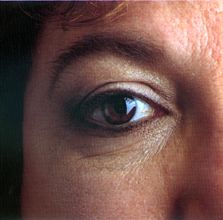
 OK — You are now putting on glasses to read the fine print…but are you taking care of your eyes?
Why is it the eyes are among the first “things to go.” Is it nature’s way of helping you not see the normal changes of aging? Is it hereditary? Or did you not take care of your eyes the way you watch your weight, your exercise regimen or social schedule? A recent survey shows Americans lack critical facts about maintaining eye health.
Most Americans do not know the risks and warning signs of diseases that could blind them if they don’t seek timely detection and treatment, according to recent findings of the Survey of Public Knowledge, Attitudes, and Practices Related to Eye Health and Disease. This survey was sponsored by the National Eye Institute, one of the National Institutes of Health, and the Lions Clubs International Foundation.
Seventy-one percent of respondents reported that a loss of their eyesight would rate as a 10 on a scale of 1 to 10, meaning that it would have the greatest impact on their day-to-day life. However, only eight percent knew that there are no early warning signs of glaucoma, a condition that can damage the eye’s optic nerve and result in vision loss and blindness.
Fifty-one percent said that they have heard that people with diabetes are at increased risk of developing eye disease, but only 11 percent knew that there are usually no early warning signs. Only 16 percent had ever heard the term “low vision,” which affects millions of Americans. Low vision is vision loss that standard eyeglasses, contact lenses, medicine, or surgery cannot correct, making everyday tasks difficult to do. Simple tasks like reading the mail, watching TV, shopping, cooking, and writing become challenging.
Hispanic respondents reported the lowest access to eye health information, knew the least about eye health, and were the least likely to have their eyes examined among all racial/ethnic groups participating in the survey. Forty-one percent of Hispanics reported that they had not seen or heard anything about eye health or disease in the last year, compared with 28 percent of Asians, 26 percent of African-Americans, and 16 percent of Caucasians.
More than 3,000 adults were selected randomly to participate in this national telephone survey conducted between October 2005 and January 2006. The findings reinforce the critical need to educate the public about common eye diseases, such as glaucoma, diabetic eye disease, and age-related macular degeneration.
“Good eyesight is important to our quality of life and it is essential for adults to have accurate information to help them make informed decisions about their eye health needs,” said Paul A. Sieving, M.D., Ph.D., director of the National Eye Institute (NEI), one of the National Institutes of Health. “These survey results will help us identify specific ways in which we can close the gap in knowledge about eye diseases and address the disparities that exist.”
NEI plans to use the survey results to develop ways to raise public awareness of eye disease and the importance of early detection and treatment. NEI also will expand its educational outreach to Hispanics.
In addition, NEI will increase its efforts to educate health care providers on how to communicate with patients about ways to preserve and protect their vision.
“The survey shows us that nearly one quarter of Americans have not seen or heard anything about eye health or disease, and yet more than 90 percent have seen a health care provider,” Sieving said. “We need to educate these doctors, nurses, and other health care professionals with the tools they need to educate their patients on how to better maintain their eye health.”
NEI coordinates the National Eye Health Education Program (NEHEP) in partnership with a variety of public and private organizations that conduct eye health education programs. The focus of NEHEP is on public and professional education programs that encourage early detection and timely treatment of glaucoma and diabetic eye disease and the appropriate treatment for low vision.
Lions Club International Foundation developed the Lions Eye Health Program, a community-based education program for Lions clubs, other community organizations, and individuals to promote healthy vision and to raise awareness of the causes of preventable vision loss. The mission of this Program is to empower communities to save sight through the early detection and timely treatment of glaucoma and diabetic eye disease, encourage those at higher risk to get a dilated eye exam, and educate those with low vision and their caregivers about these conditions.
“Lions have long been champions of people who are blind and visually impaired. By better educating the public on the need for regular eye exams and timely treatment of eye diseases, we can end preventable blindness,” said Jimmy Ross, Chairperson, LCIF.
For more information: