


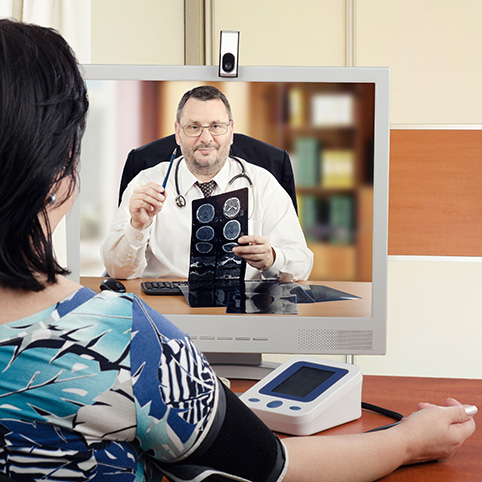
Photo: Deposit Photos
A new report from the U.S. Department of Health and Human Services (HHS) found that massive increases in the use of telehealth helped maintain some health care access during the COVID-19 pandemic, with specialists like behavioral health providers seeing the highest telehealth utilization relative to other providers.
The report, which was produced by researchers in HHS’s Office of the Assistant Secretary for Planning and Evaluation (ASPE) and analyzes Medicare fee for service (FFS) data in 2019 and 2020, also highlights that telehealth services were accessed more in urban areas than rural communities, and Black Medicare beneficiaries were less likely than White beneficiaries to utilize telehealth.
“This report provides valuable insights into telehealth usage during the pandemic,” said CMS Administrator Chiquita Brooks-LaSure. “CMS will use these insights – along with input from people with Medicare and providers across the country – to inform further Medicare telehealth policies.”
“During the COVID-19 pandemic, various telehealth flexibilities enabled patient access to their providers,” said HHS Acting Assistant Secretary for Planning and Evaluation Rebecca Haffajee. “Pre-pandemic telehealth visits for Medicare beneficiaries went from hundreds of thousands to tens of millions, with many utilizing telehealth for the first time. Today’s report offers a detailed data analysis on important trends for policymakers.”
To help beneficiaries maintain some access to care amid stay-at-home orders to reduce COVID-19 related exposure, CMS used emergency waiver authorities enacted by Congress, as well as existing regulatory authorities to implement policies expanding access to telehealth services during the pandemic. These included waiving several statutory limitations such as geographic restrictions and allowing beneficiaries to receive telehealth in their home.
Outside of the public health emergency (PHE), Medicare is generally restricted to payment for telehealth services in certain, mostly rural areas, and when beneficiaries leave their home and go to a clinic, hospital, or other type of medical facility for the service. There were some exceptions for beneficiaries with end-stage renal disease, stroke and other specific conditions. Additionally, in response to the pandemic, the HHS Office for Civil Rights relaxed enforcement of Health Insurance Portability and Accountability Act (HIPAA) of 1996 privacy requirements for videoconferencing.
Taken as a whole, the ASPE report found that the share of Medicare visits conducted through telehealth in 2020 increased 63-fold, from approximately 840,000 in 2019 to 52.7 million.
Which States Used Telehealth
States with the highest use of telehealth in 2020 included Massachusetts, Vermont, Rhode Island, New Hampshire and Connecticut. States with the lowest use of telehealth in 2020 included Tennessee, Nebraska, Kansas, North Dakota and Wyoming.
The report also found insightful trends on the kinds of services Medicare beneficiaries sought through telehealth. While overall health care visits for Medicare beneficiaries declined in 2020 as compared to 2019, telehealth was particularly helpful in offsetting potential foregone behavioral health care.
In 2020, telehealth visits comprised a third of total visits to behavioral health specialists, compared to 8 percent of visits to primary care providers and 3 percent of visits to other specialists. These findings prominently show an increased interest in seeking behavioral health care through telehealth.
Mental Health and Telehealth
To help protect access to care as informed by data, CMS recently announced that for the first time outside of the COVID-19 PHE, Medicare will pay for mental health visits furnished by Rural Health Clinics and Federally Qualified Health Centers via interactive video-based telehealth, including audio-only telephone calls.
Additionally, CMS is permanently eliminating geographic barriers and allowing patients in their homes to access telehealth services for diagnosis, evaluation, and treatment of mental health disorders, including via audio-only communications technology. These provisions were included in the Consolidated Appropriations Act of 2021.
Other Medicare services added to the telehealth services list temporarily during the PHE will remain in place through December 31, 2023, while CMS continues to evaluate whether these services should be permanently added to the Medicare telehealth services list. And to provide more transparency and visibility into telemedicine usage, CMS is also releasing a new snapshot showing the number of people with Medicare who utilized telemedicine services between March 1, 2020, and February 28, 2021. The snapshot includes Medicare FFS claims data, Medicare Advantage (MA) encounter data, and Medicare enrollment information.
While utilization of telehealth services increased and improved access to services for many beneficiaries, more research is needed to understand the impact on quality of care and why certain beneficiaries used less telehealth than others.